
This study looked at whether STEMscopes Science increased student science achievement in Tennessee. Researchers examined three years of state science test results (TNReady) from elementary schools across Tennessee. They compared schools that used STEMscopes Science to similar schools that did not use the curriculum. There were a few big questions:
In total, the study included 128 public elementary schools (64 STEMscopes, 64 comparison) across 31 districts, with results tracked from third through fifth grade across three school years.

STEMscopes Science was linked to higher science achievement, especially early on./strong>
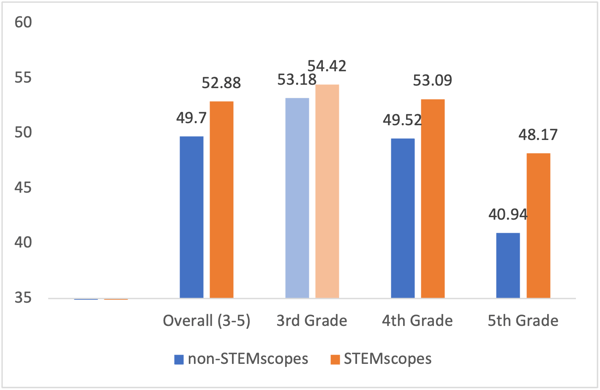
Figure 1. 2023 Main Impact of STEMscopes Science on schools’ percent of students that "Meet or Exceed" grade level on the TNReady Science. Note. Columns with darker shading are significant at p < .05.
These gains were largely maintained over time.
In the second year, STEMscopes schools continued to significantly outperform comparison schools, particularly in fifth grade.
Some schools saw even stronger benefits over time.
After multiple years of use, STEMscopes had especially strong, significant effects in schools serving higher percentages of Hispanic/Latinx students, with some evidence of stronger effects for schools serving higher percentages of African American/Black students as well.
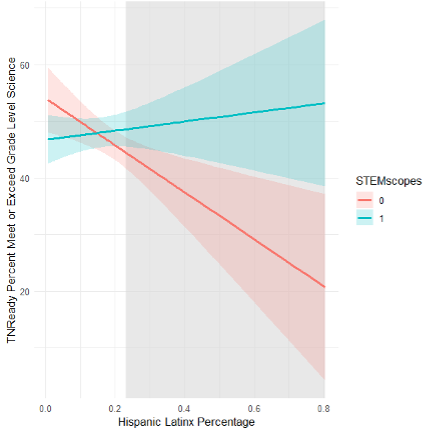
Figure 2. Year 3 interaction between STEMscopes and percentage of Hispanic/Latinx students in a school. Note. Gray indicates that TNReady scores were significantly higher in STEMscopes schools with over 22% Hispanic Latinx students relative to non-STEMscopes schools.
The curriculum provided an early boost in science performance that was sustained as students moved through elementary grades. Over time, schools serving higher numbers of historically marginalized students—particularly Hispanic/Latinx students—experienced even greater benefits.
In short:
STEMscopes Science works across many types of schools
Early gains stick
Long-term use appears especially beneficial for schools serving students who often face greater educational barriers, math reasoning, and problem-solving
STEMscopes Science helps elementary schools improve science achievement—and those benefits last.

Designed to make measurable impacts on student achievement, Accelerate Learning Inc. offers you a customized STEM solution for all your students. Learn how you can preview or demo our products for free.

Explore More Research & Case Studies


